
Automatic door openers
You can ramp the steps and widen the hall, and someone still has to pull a door open while holding a chair steady.
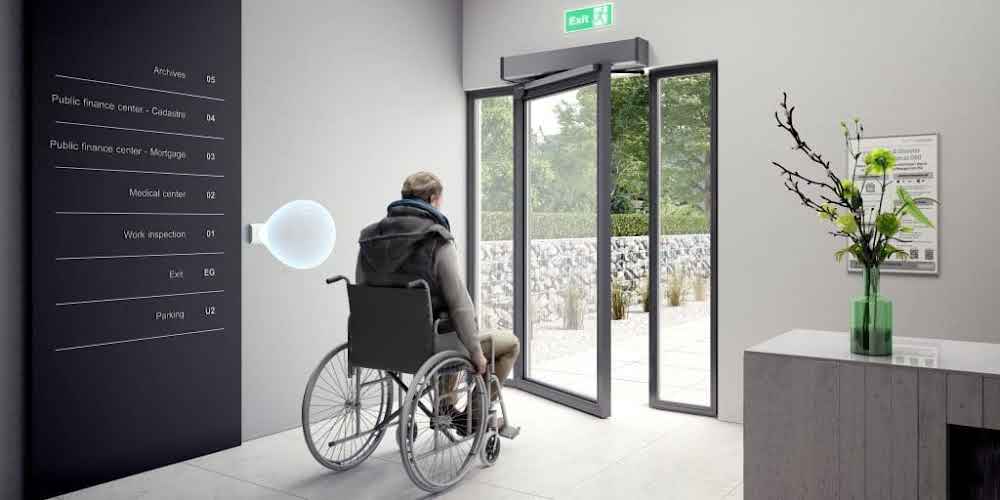
Low energy door operators with push plates or remote fobs, for front doors, garage entries and interior doors. Surveyed, installed and adjusted properly.
- Push or fob
- Two ways to open
- Low energy
- Safe residential operator
- Front or interior
- Any door
- Sensors
- Stops on obstruction
Which door, and how should it open?
The operator is largely standard. Which door it goes on and how you trigger it are what you live with every day.
Question 1 of 3
A door is a two-handed job, and a wheelchair user has neither hand free.
To open a door from a wheelchair you have to position the chair to one side of the swing, hold it still, reach across, turn the handle, pull the door towards yourself past your own wheels, then move through before it closes. On a slope, in wind, or with a self-closer fitted, that sequence is close to impossible alone.
It is also why so much accessibility work goes half-used. Families spend real money on a ramp or a platform lift and then discover the front door is the actual barrier. A door operator is usually the cheapest item in an access project and frequently the one that makes the rest of it work.
Out of the house alone
Without a powered door, leaving the house needs somebody else. With one, it does not. That is the whole point.
No holding position on a slope
Reaching for a handle while a chair wants to roll backwards is where a lot of falls and near misses happen.
Wind takes doors
A gust on a storm door is genuinely dangerous for anyone who cannot let go and step back.
Hands full, both of them
Anyone pushing a chair, carrying shopping or supporting someone walking has the same problem for the same reason.
The operator is standard. The trigger is what you live with.
Most installations end up using more than one of these, and they are inexpensive to add at the same time.
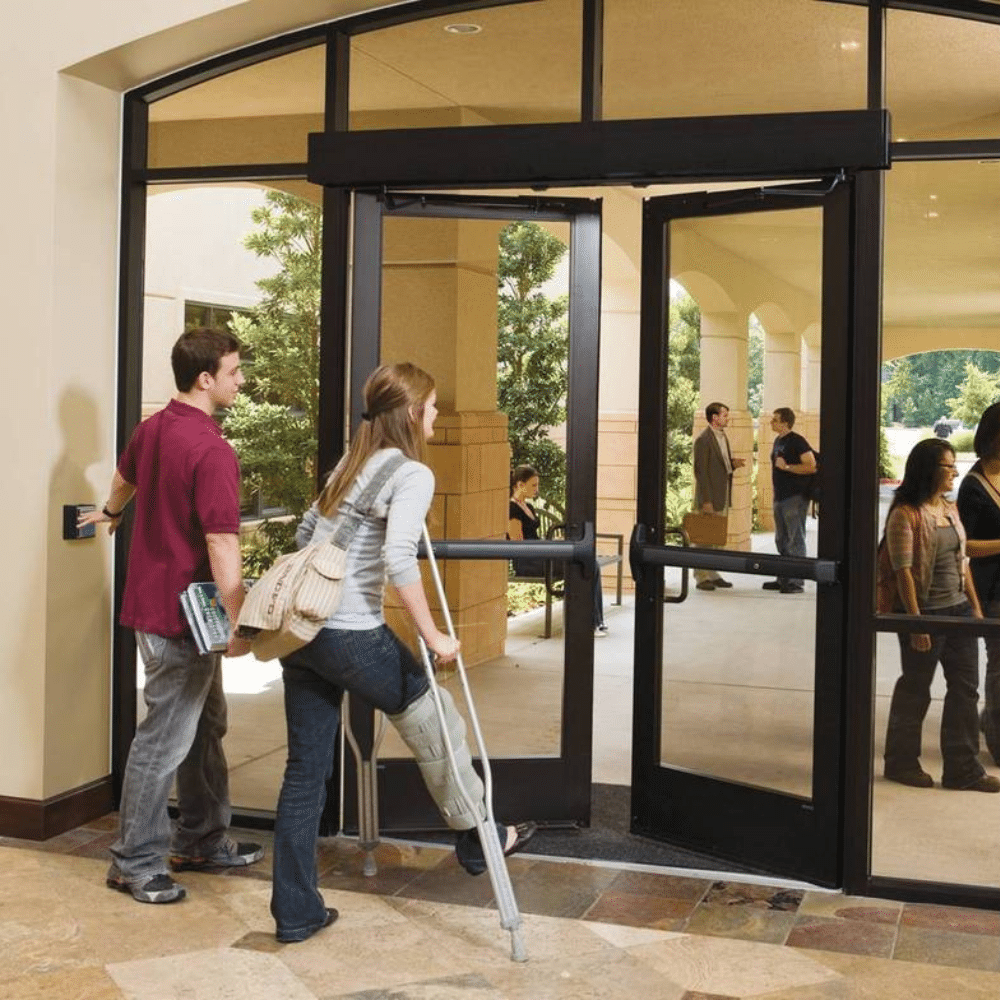
A large plate mounted at wheelchair height beside the door, inside and out. Press it with a hand, an elbow or a footplate and the door opens.
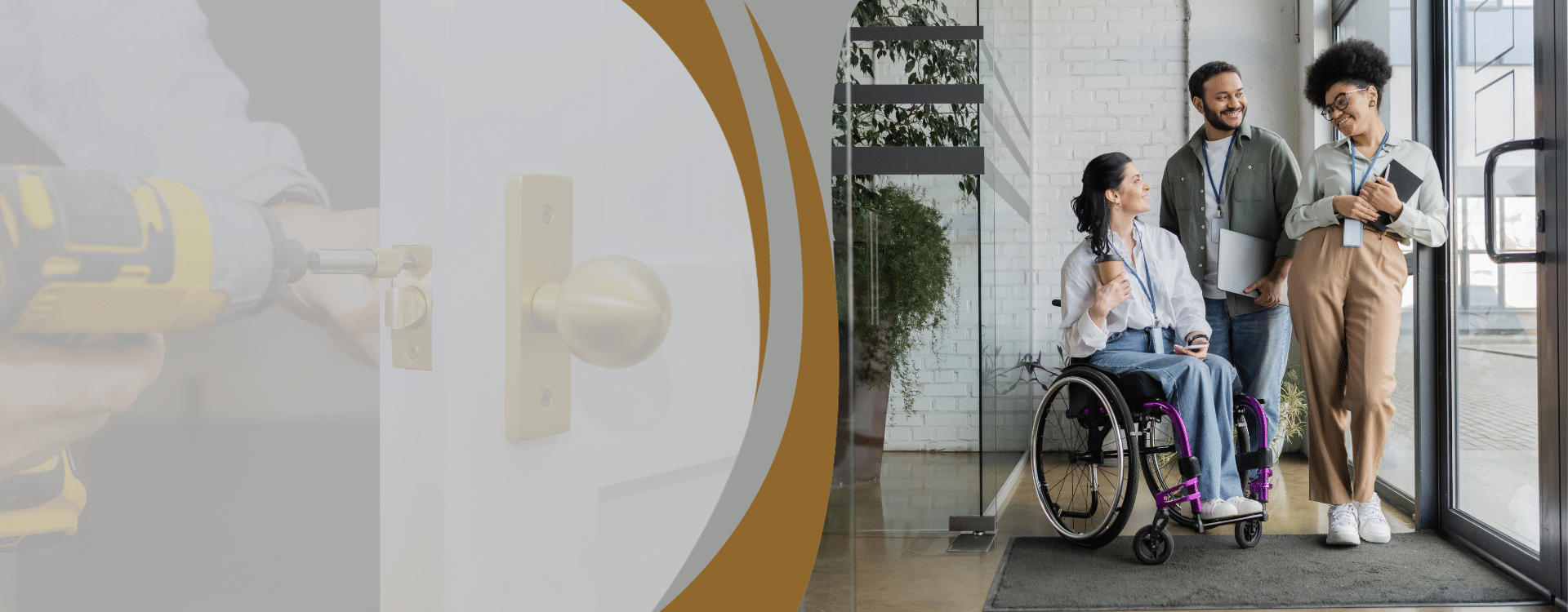
A key fob operated from the chair, so the door is already opening as you approach rather than after you arrive at it.
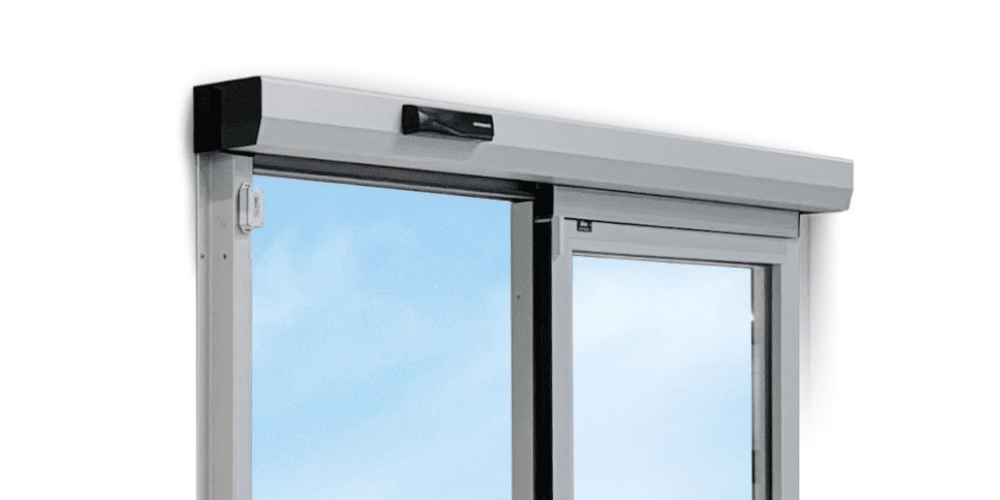
Battery powered plates that talk to the operator wirelessly, so a plate can go where it is needed without running cable through a wall.
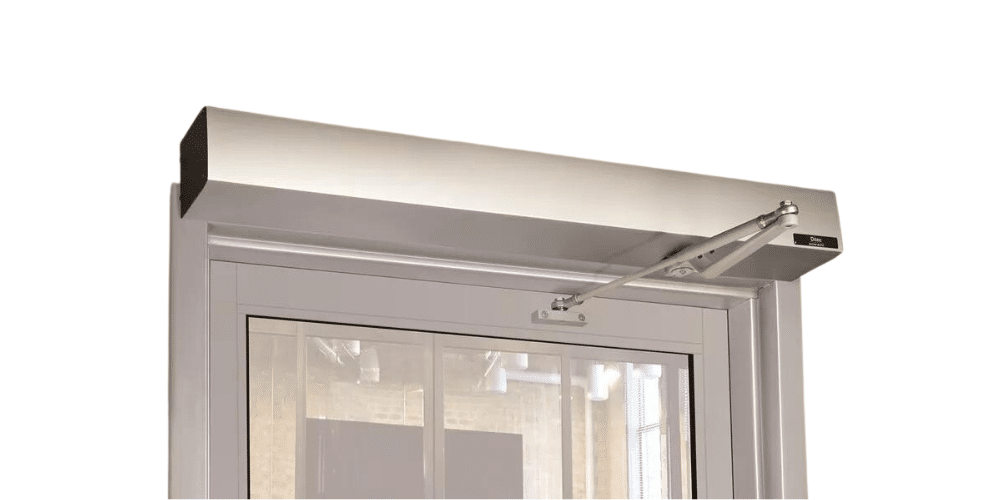
Bathroom and bedroom doors, where a heavy door or a self-closer makes a room effectively inaccessible from a chair.
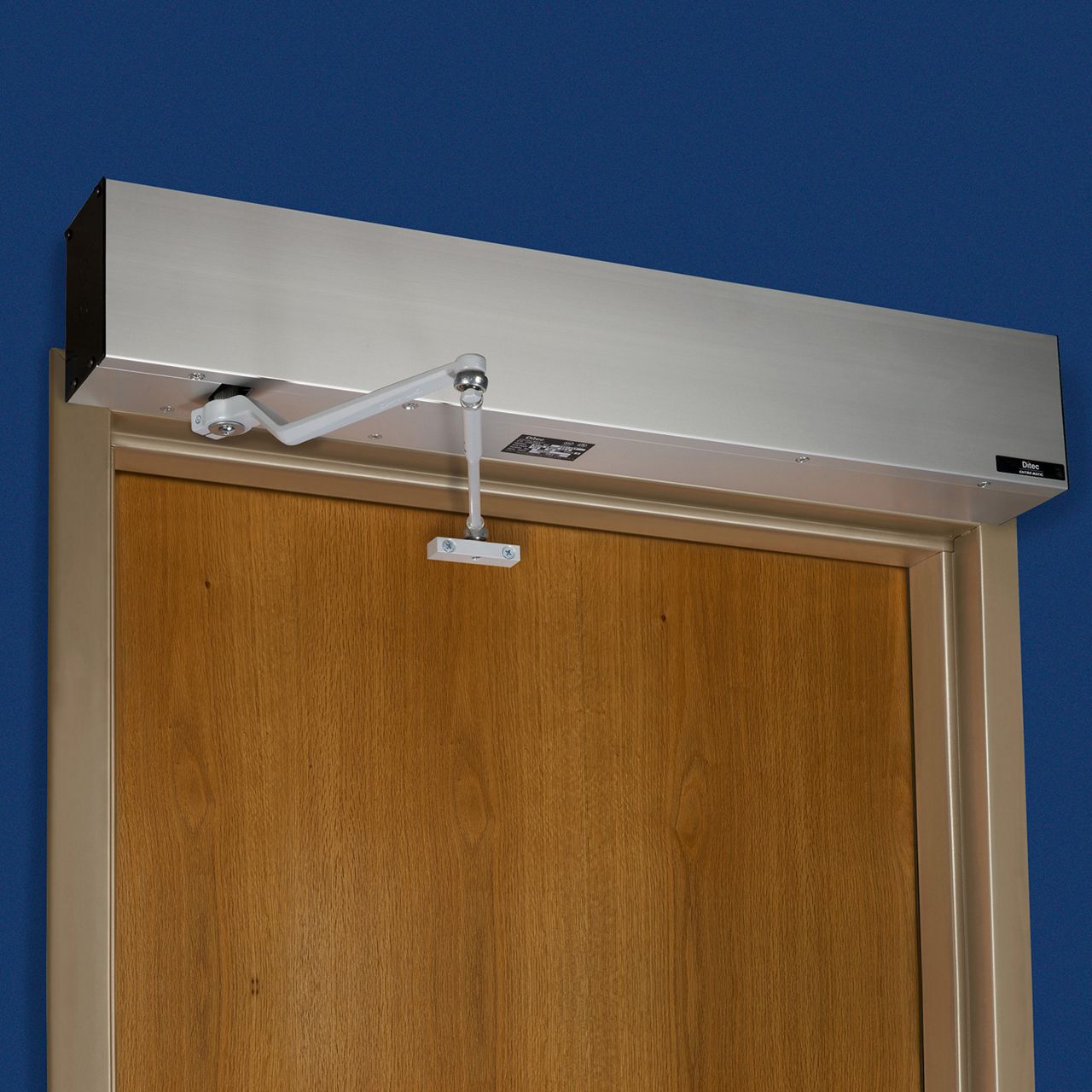
The door, the frame, the power and the swing.
A door operator mounts to the frame or the wall above the door and needs the structure to take it, plus a power supply within reach. Most residential installations are straightforward, but the survey is what tells us whether yours is.
The swing matters more than people expect. A door that opens outwards, a storm door in front of it, or a hallway too narrow for the door to swing clear all change the specification. So does whether the door currently has a self-closer fighting the operator.
What goes with it
The other things that make a doorway genuinely usable.
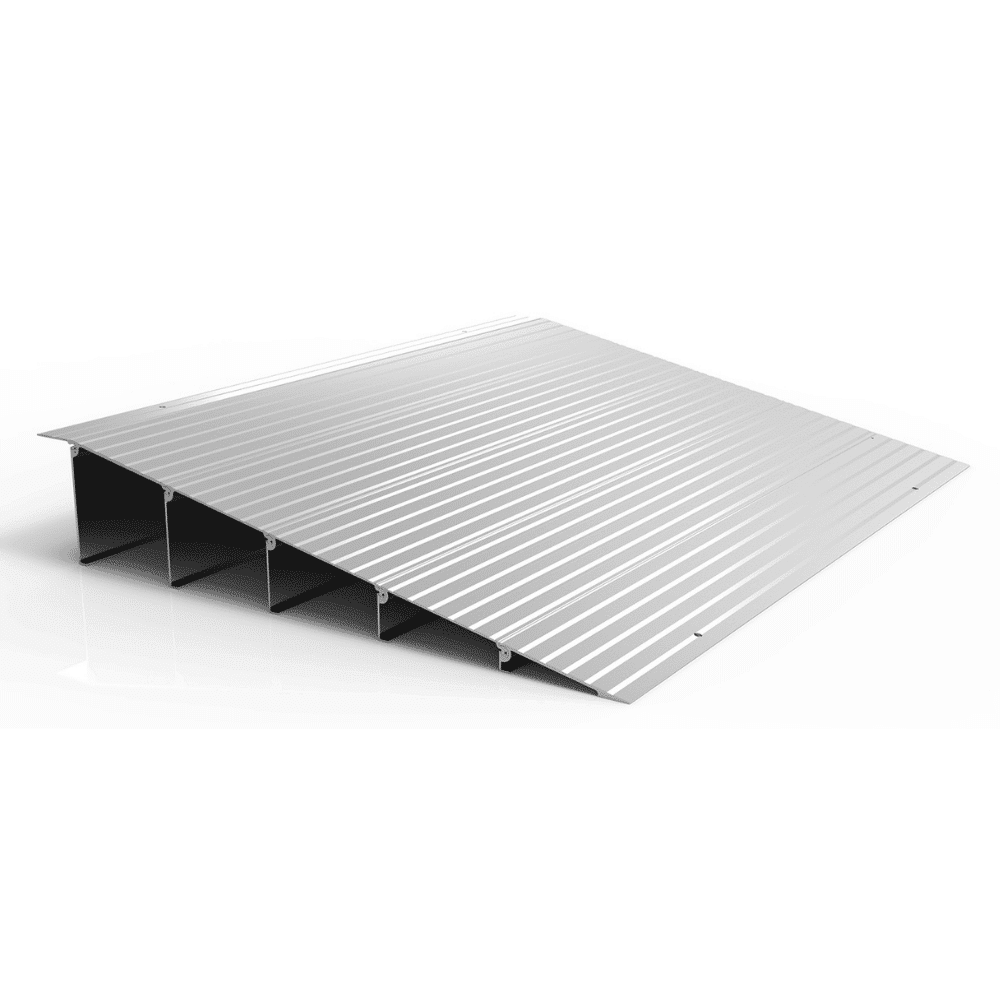
Threshold ramps
The raised sill under the door. An inch is enough to stop a chair dead, and a threshold ramp is the cheapest fix in the whole project.
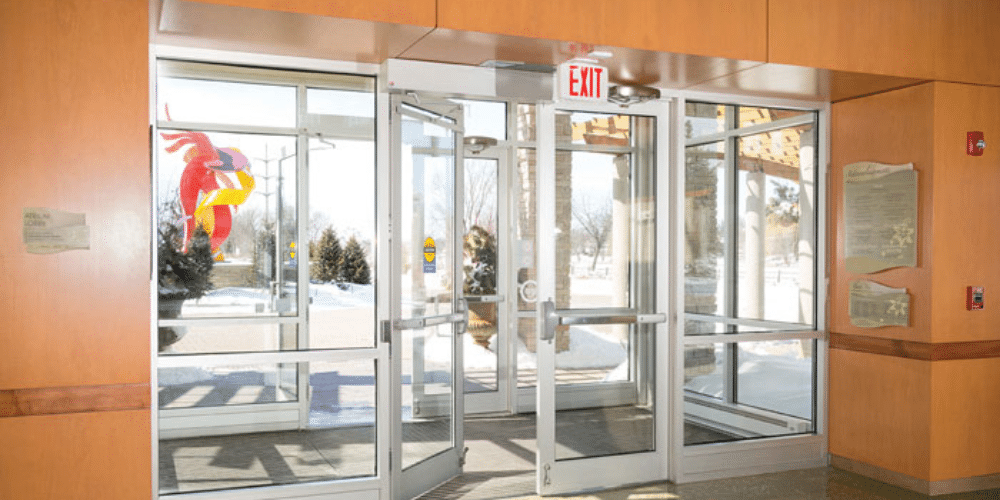
Wider doorways
Where the opening itself is too narrow. Widening a residential doorway is usually less disruptive than people assume.
Lever handles
For anyone still opening doors by hand, lever handles replace round knobs that arthritic hands cannot grip or turn.
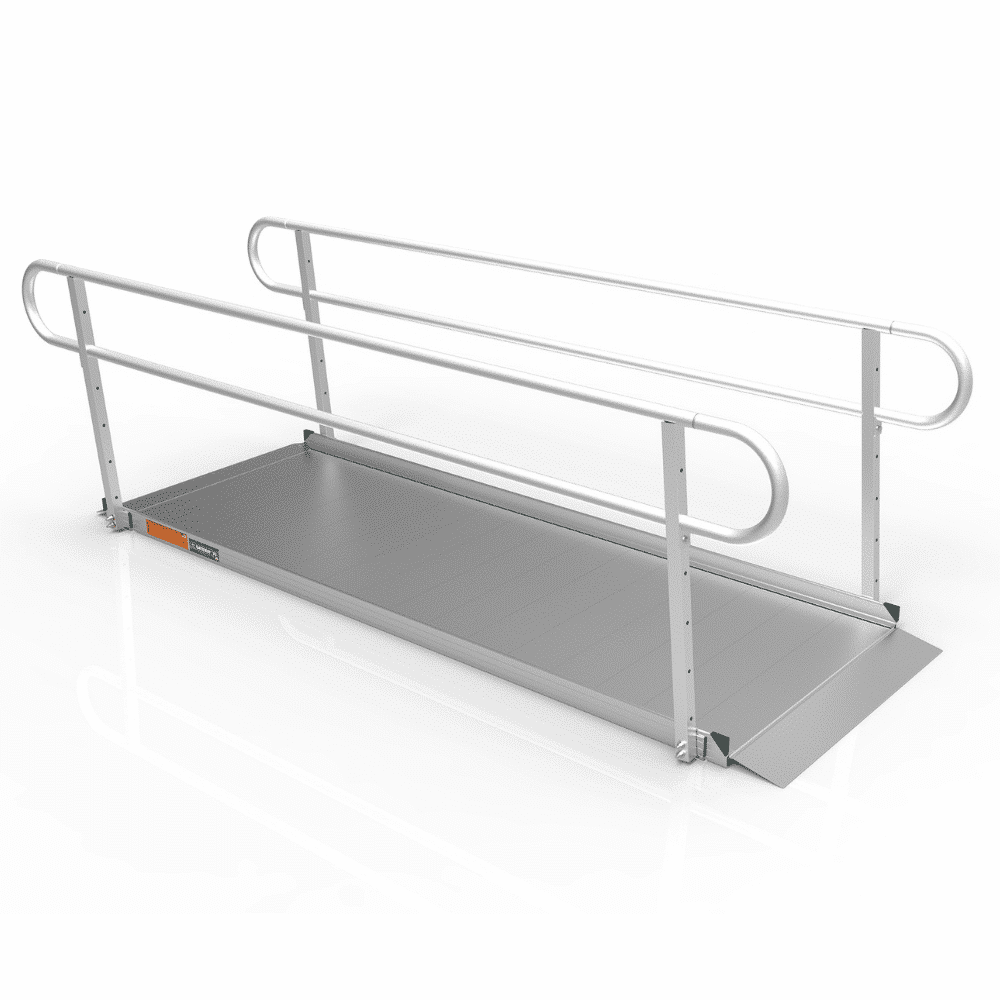
Outdoor railings
Handrails at the entrance for the people in the household who walk. Both routes into the house should be safe.
Questions about automatic door openers
If yours is not here, call us on 905 451-7743. A person answers during business hours.
Can an automatic opener be fitted to my existing door?
Usually, yes. Low energy operators mount to the frame or the wall above the door and work with most residential doors. What the survey checks is whether the frame and header will take the mounting, whether power can be routed there, and whether the swing works.
Push plate or remote fob?
A push plate has nothing to carry, lose or charge, which for most households makes it the better daily choice. A fob opens the door as you approach rather than after you arrive, which matters more outdoors and in bad weather. Many installations use both.
Is it safe if someone is in the doorway?
Yes. Low energy operators open slowly by design and are fitted with safety sensors that stop and reverse the door if it meets an obstruction. They are the standard for residential and light commercial use for exactly that reason.
What happens in a power cut?
The door can still be opened and closed by hand. Operators disengage under manual force rather than locking the door shut, so a power failure is an inconvenience rather than a trap.
Does it work with a storm door?
It can, but the storm door has to be dealt with too, because two doors in series defeats the purpose. Options include an operator on both, removing the storm door, or replacing it with something lighter. We look at this at the survey and price the alternatives.
Can you fit one to a bathroom or bedroom door?
Yes, and it is more common than people expect. A heavy interior door or one with a self-closer can make a bathroom effectively inaccessible from a wheelchair. Interior installations are usually simpler and less expensive than front doors.
Does ADP cover a door opener?
No. It is not an Assistive Devices Program category. March of Dimes Canada's Home and Vehicle Modification Program is the usual route, along with the Ontario Seniors' Home Safety Tax Credit. ODSP, WSIB, Veterans Affairs and the Interim Federal Health Program can also apply, and openers are often bundled into a larger access application.
How long does installation take?
Most residential installations are done in a day once the operator has arrived. If power has to be run any distance, or a storm door is being modified, it takes longer, and we tell you which applies at the survey.
Will it keep the door locked?
The operator handles opening and closing, not locking. Where security matters we can integrate it with an electric strike or a keypad so the door unlocks and opens from one trigger. Mention it at the survey because it changes the wiring.
Can it be fitted to an apartment or condo door?
Often yes, but it usually needs the building's permission because it involves the door and the frame, which are commonly common property. We can provide the specification and drawings a condo board will ask for.
How much does one cost?
Less than most people expect relative to a ramp or a lift, and it varies with the operator, the number of plates and how far power has to run. We give you a written price after the survey rather than a range that turns out not to apply. Everything is quoted at your assessment.
Do you service them afterwards?
Yes. Operators need occasional adjustment as a door settles and weather-strip compresses, and wireless plates need batteries. We service what we install, from Brampton, across the GTA.
You might also be looking at
Book a free door assessment
We look at the door, the frame, the power route and the swing, and tell you what is possible. No charge for the visit.