Access Flow X
stairlift
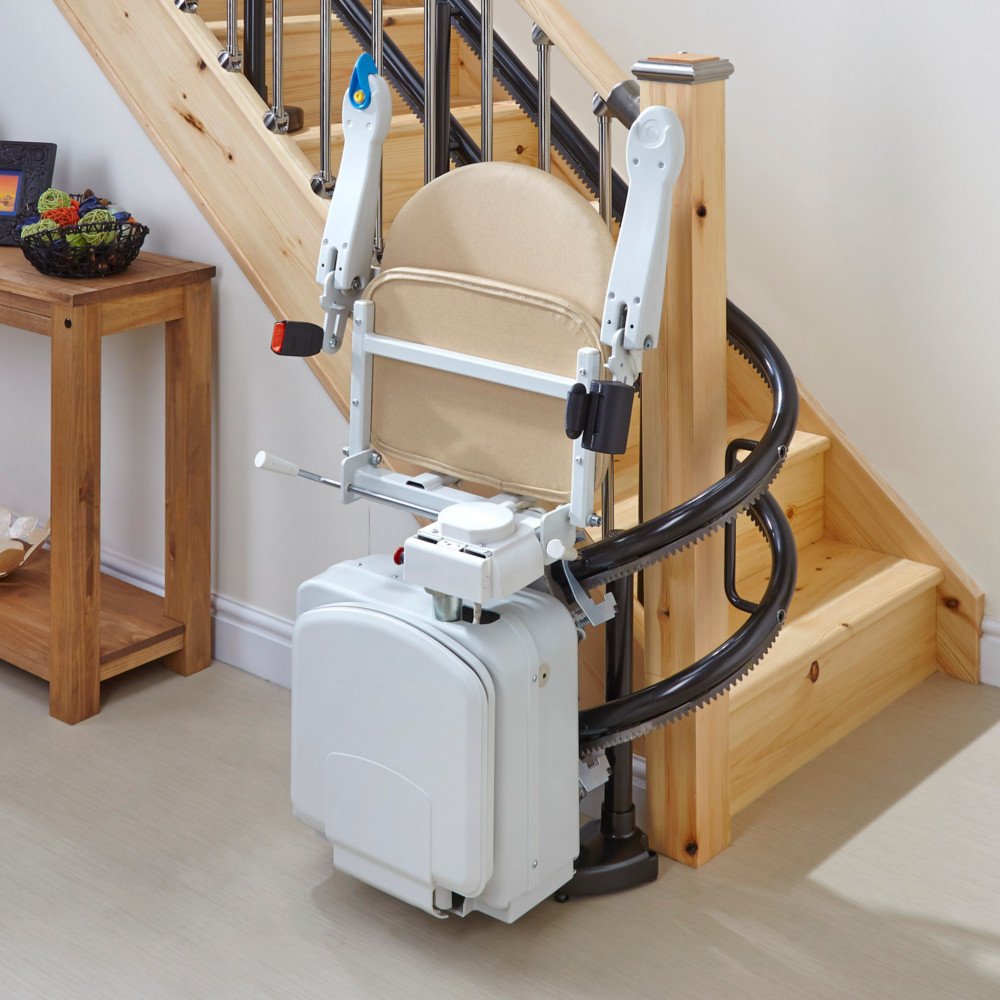
The seat turns while the lift is moving. That one idea is why the Flow X fits staircases as narrow as 24 inches.
Straight or curved, up to 72 degrees of incline, and fixed to the staircase rather than your walls. If you have been told your stairs are too narrow or too steep, this is the lift to ask about.
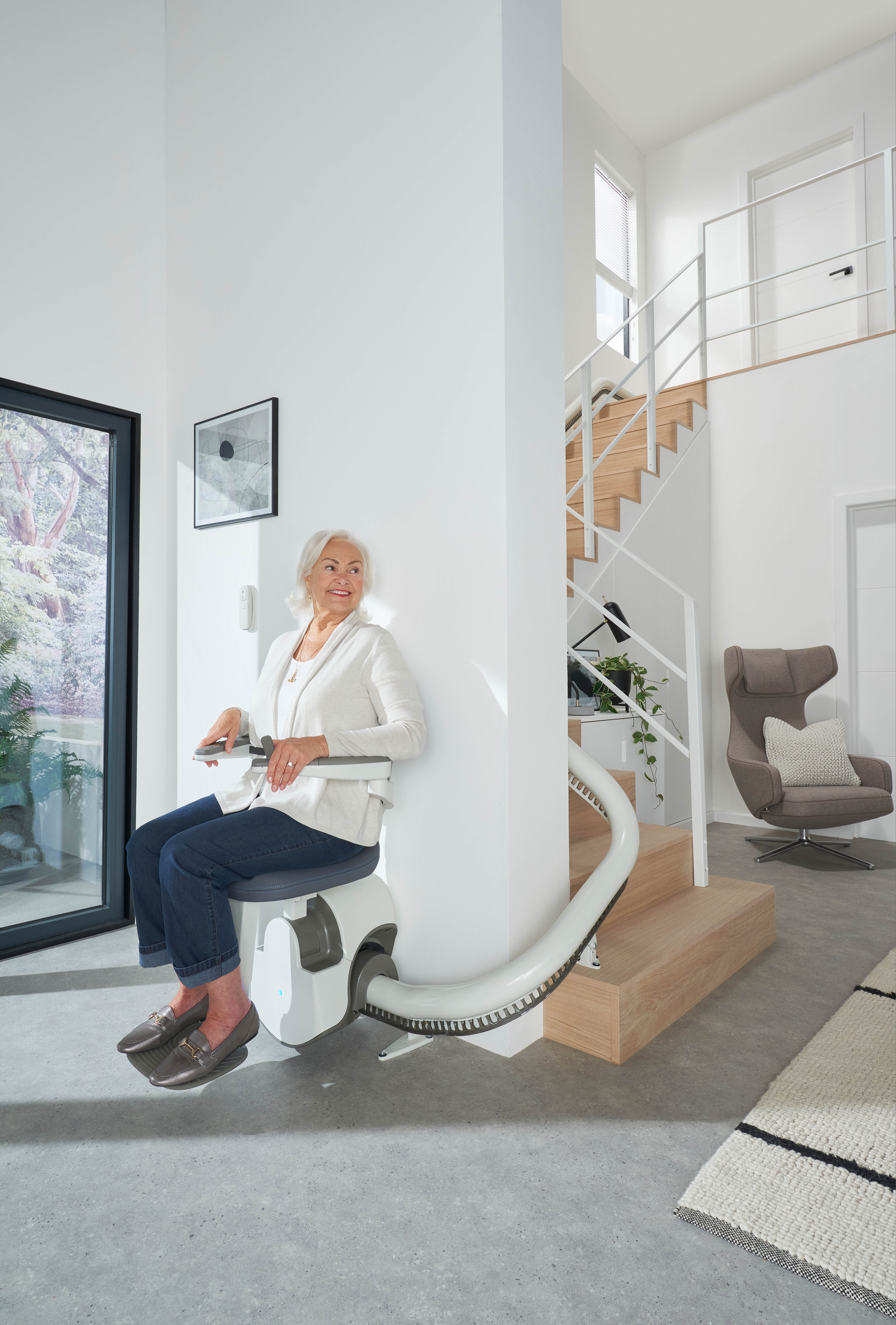
It turns as it goes, and stays level the whole way.
The orientation the seat holds through a turn is what sets the minimum width of staircase a lift can be fitted to. Several lifts offer a powered swivel that works in travel; the Flow X is built around it rather than offering it as an option.
ASL rotates the seat continuously as the Flow X travels, and keeps it perfectly level the whole time. What Access BDD adds here is the levelling, and the 24 inch rating that comes with it.
The footrest swivels with the seat rather than staying square to the rail, so your legs and feet keep a natural position through the turn instead of being twisted across the steps.
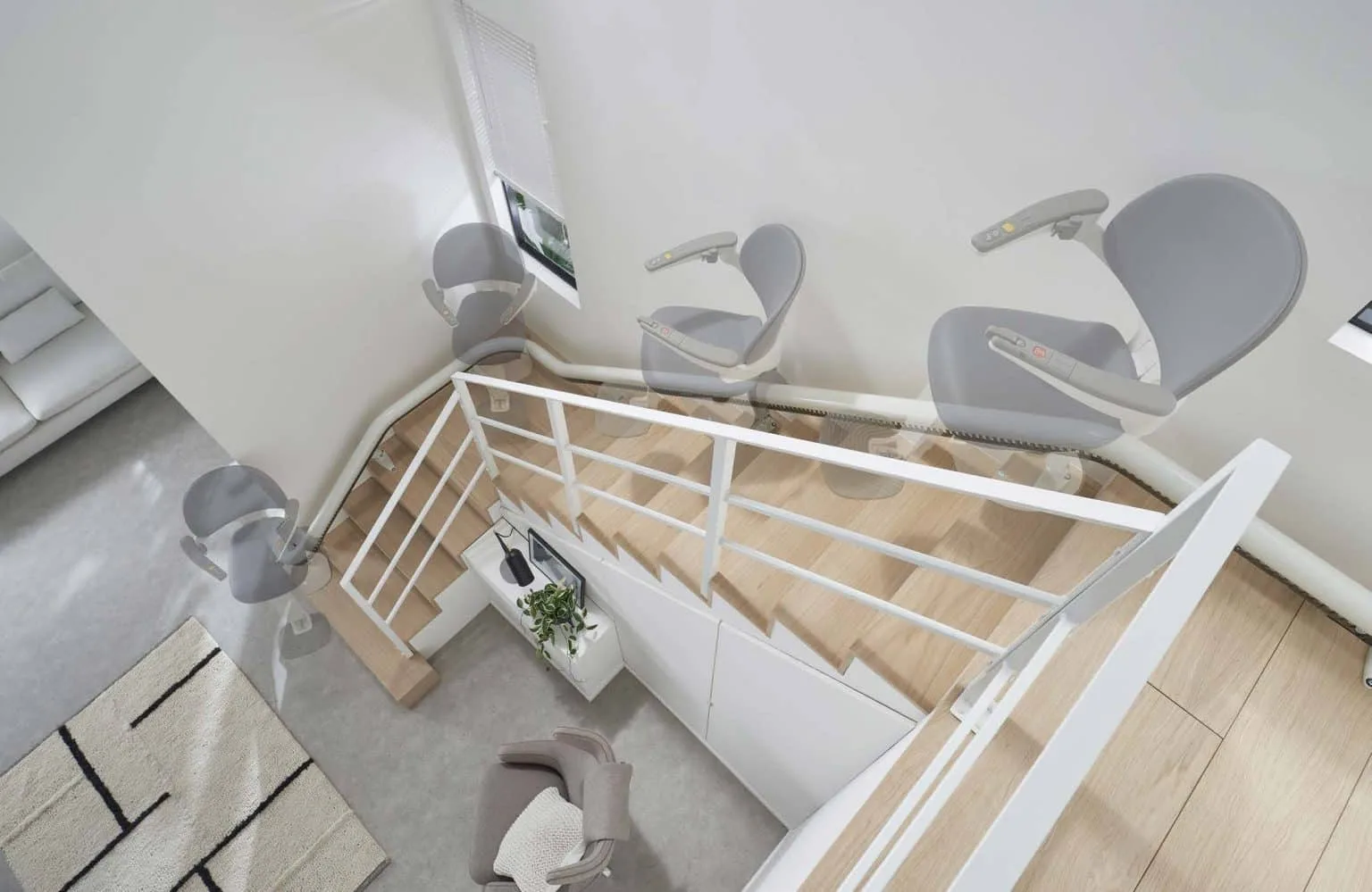
If you have been told no before, read this part.
Two numbers decide whether a staircase can take a lift at all: how wide it is, and how steeply it climbs. On incline the Flow X goes further than anything else we install, and on width further than any lift we hold a published figure for.
Access BDD rates the Flow X down to 610 mm between the walls. The HomeGlide, the next narrowest we hold a published figure for, needs 29 inches. For the Handicare and Savaria models we measure your staircase rather than quote a number, so bring us the difficult one.
A staircase steeper than about 55 degrees rules out most stairlifts on the market. The Flow X takes 72, which covers the tight cottage flights and converted lofts that other suppliers turn down.
The parts you touch every single day.
A stairlift is used two or three times an hour for years. These are the details that decide whether that is pleasant or a chore.
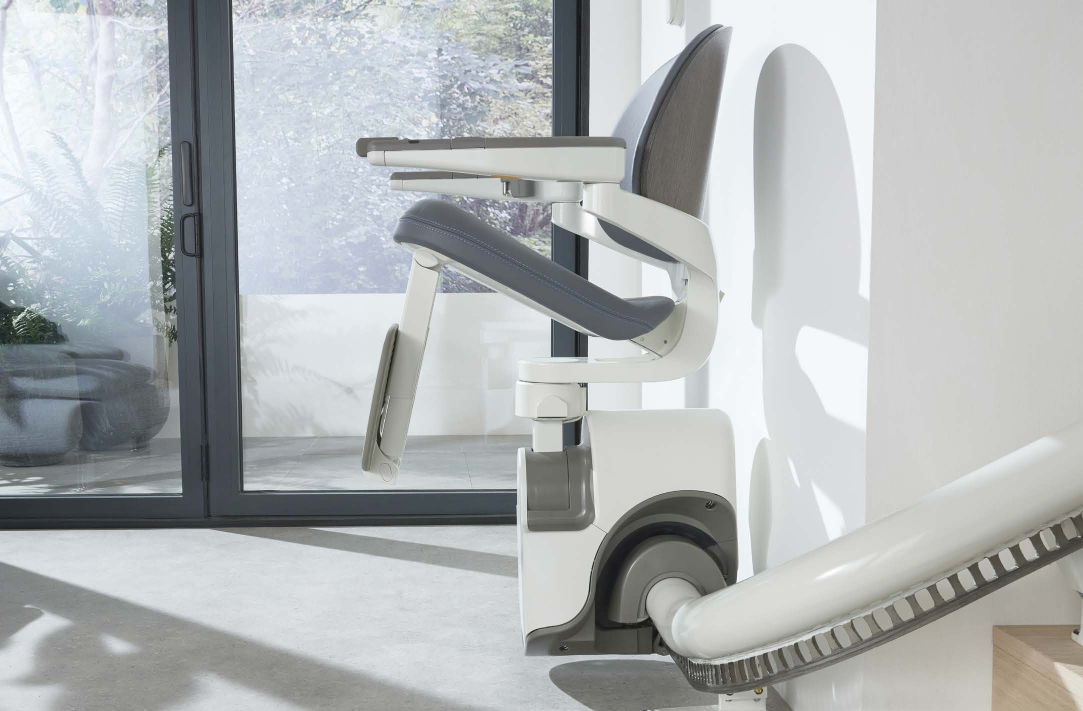
It unfolds itself. You press one button.
Most stairlifts need the seat lowered by hand, the armrests dropped and the footrest kicked down. That is three separate movements, and for anyone with a bad shoulder or a stiff back it is the part of the day they dread.
Access BDD gives the Flow X complete automatic unfolding at the push of a button, and markets that as unique to this lift. How much of it is powered is your choice, and the three configurations are priced differently.
Five pre-adjustable positions, set to your height at installation, with an anti-slip surface. It swivels with the seat under ASL, so your feet arrive where your body does.
The chair comes to whoever needs it.
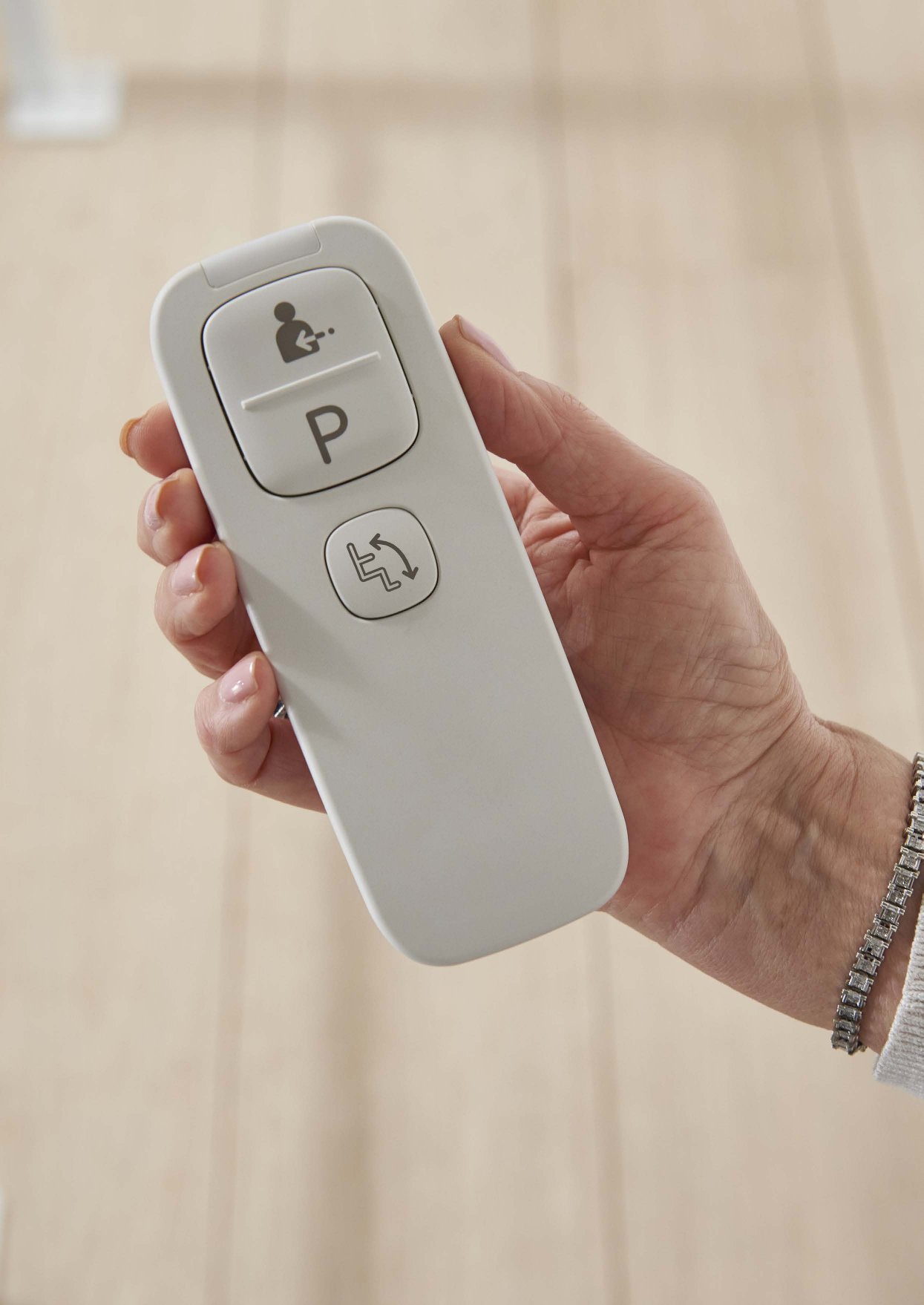
A remote sits at the top of the stairs and another at the bottom. Press call and the lift comes to you; press park and it takes itself to its parking point, off the walking line.
Each handset carries a status indicator that mirrors the one on the lift itself, so you can see from the landing whether it is charging, ready or in use without walking down to check.
Controls and safety, one at a time
None of this is decoration. Each one removes a specific way a stairlift journey can go wrong.
Angular armrest detection
Patented, and standard. The lift stays put until both armrests are correctly positioned, so it cannot set off with an arm hanging over the edge.
Seatbelt detection
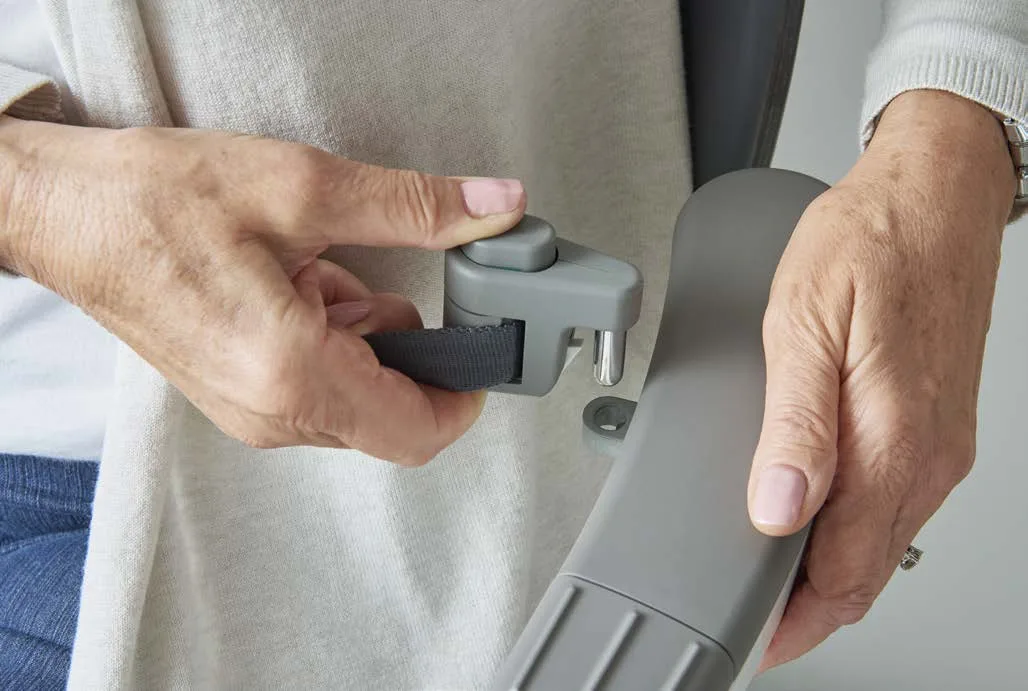
The retractable belt fastens with one hand, and the Flow X checks it is done up before it will travel. Not an optional extra.
Anti-entrapment sensor
Detects clothing or small objects caught in the mechanism and stops, which matters most on the return journey when nobody is watching the lift.
Foldaway joystick
A soft-touch grip that folds neatly into the armrest when you are not using it, so there is nothing protruding to catch a sleeve on.
Dual status lights
Set into the armrest, telling you at a glance whether the lift is charged, ready and safe to move.
Call device
Up to three telephone numbers can be programmed and dialled directly from the stairlift, so help is reachable without getting up.
Three decisions, and none of them are cosmetic.
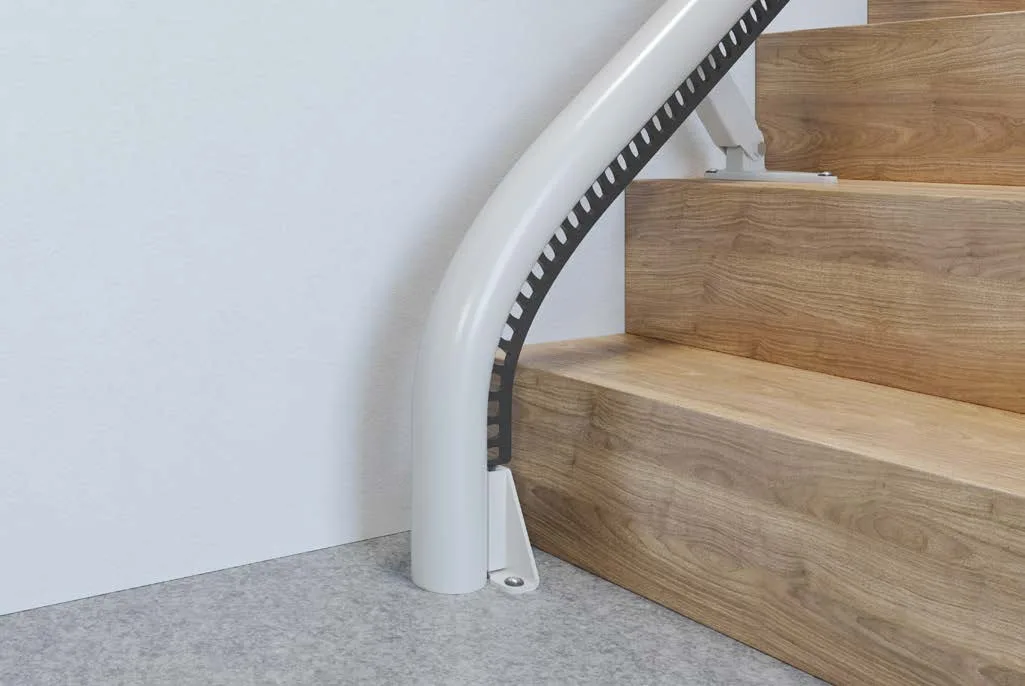
How the rail ends at the bottom step, which armrest shape suits the person riding it, and what the whole thing looks like in your hallway. We walk through all three at the measure, but it helps to arrive with an opinion.
Three shapes, and this is how you get in and out
The shape matters more than it looks, because it is what you push against when you stand. Try all three at the assessment before deciding.
Ten colours, three materials
Three Firenze leathers, four woven fabrics and three coated vinyls. Leather wipes cleanest, vinyl wears hardest, fabric is the warmest to sit on in a cold hallway. A Grey Oak wood finish is also available for the armrests. Choose against the wall behind the staircase rather than the carpet, because the seat is at eye level from the hallway and the carpet is not. We bring samples to the assessment.
And the rail, by RAL code
The rail runs the whole length of your staircase, so this choice decides how much the lift is noticed. Match it to the wall, not the carpet.
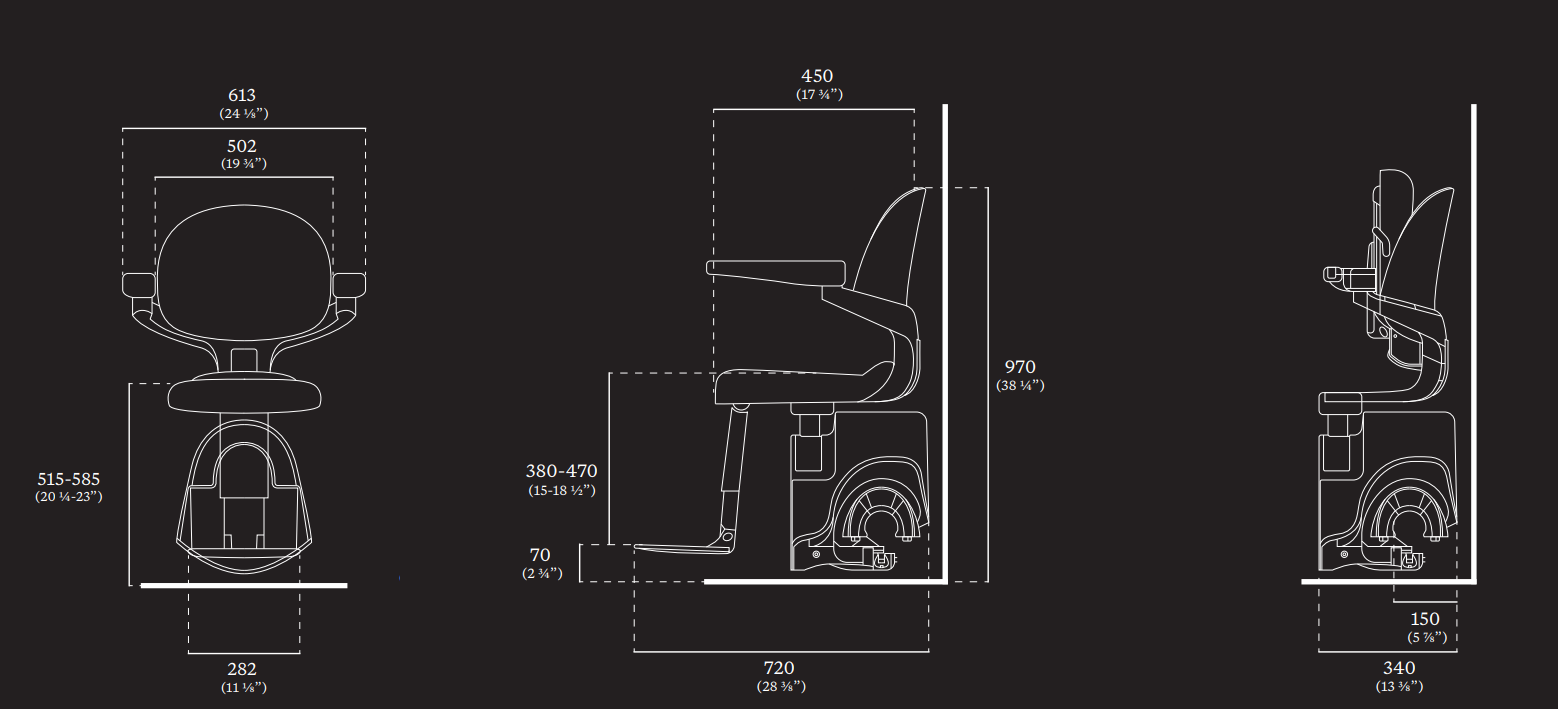
Everything Access BDD publishes, in one place.
Figures from the technical specification sheet for the curved Flow X. Anything that depends on your staircase, we confirm in writing with your quote.
What actually helps, and what does not
Stairlifts are not covered by Ontario's Assistive Devices Program, whatever you may have read elsewhere. What often does apply is the Ontario Seniors' Home Safety Tax Credit, and in some cases March of Dimes Canada, WSIB, ODSP, IFHP or Veterans Affairs.
We tell you honestly at the assessment which of these you are likely to qualify for, and we complete and file the paperwork for the ones that apply.
See the funding programs we work with →Questions we get asked about the Flow X
If yours is not here, call us on 905 451-7743. A person answers during business hours.
What is the narrowest staircase a stairlift can fit on?
The Access Flow X can be fitted on staircases as narrow as 610 mm, or 24 inches. That is the narrowest of any lift we install, and it is possible because ASL rotates the seat while the lift is travelling rather than only at the landings.
What is ASL technology, and why does it matter?
Advanced Swivel and Levelling is unique to the Flow X. The seat rotates and stays perfectly level while the lift is in motion, instead of swivelling only once it has stopped. Turning as it travels lets the chair present its narrowest profile exactly where the staircase is tightest, and the footrest swivels with the seat so your legs stay in a natural position.
My staircase is very steep. Can anything be fitted?
The Flow X handles inclines up to 72 degrees, which is steeper than any other lift we install and well beyond what most stairlifts on the market manage. If a previous supplier told you your stairs were too steep, this is the model to ask us about.
What is the weight capacity of the Access Flow X?
275 lb, or 125 kg. If you need more, the Handicare 4000 is rated to 300 lb as standard with a 350 lb option, and we will tell you at the assessment which is right for you rather than selling you the wrong lift.
Is the Flow X for straight or curved staircases?
Both. Access BDD builds it for straight and curved stairs alike, and the rail is manufactured to your survey either way. That makes it worth considering whether your stairs turn or not.
Does the stairlift attach to my wall?
No. The Flow X rail fixes to the staircase itself, which is why installation is quick and causes little disruption. There is no structural work on your walls, and on removal the only trace is small bolt holes in the treads.
How much does an Access Flow X cost in Ontario?
It depends on the staircase. A straight run prices differently from a curved rail with turns, and the upholstery, armrests and landing solution all change the figure. We give you a written price at the free in-home assessment, with no obligation.
Is there funding for a stairlift in Ontario?
No. Stairlifts are not covered by Ontario's Assistive Devices Program, whatever you may have read elsewhere. The Ontario Seniors' Home Safety Tax Credit often applies, and in some cases March of Dimes Canada, WSIB, ODSP, IFHP or Veterans Affairs. We tell you honestly which you are likely to qualify for and file the paperwork for the ones that apply.
What if there is a door at the bottom of the stairs?
The Flow X has four rail endings for exactly this. The standard drop nose needs 175 mm from the bottom step, the vertical short-start drop nose only 100 mm, a horizontal overrun parks the chair away from the bottom step where there is room, and a 90 or 180 degree parking curve takes the lift out of the walking line entirely.
Does it work during a power outage?
Yes. It runs on two 12 volt batteries giving 24 volts, charged from an ordinary household outlet, and includes an emergency lowering function. No special electrical work is needed, and no new circuit.
Can I call for help from the stairlift?
Yes. The call device can be programmed with up to three telephone numbers, dialled directly from the lift, so a family member or neighbour is reachable without getting up.
Will it damage my staircase if I move house?
Very little. Because the Flow X bolts to the stair treads rather than the wall, the only evidence after removal is small holes in the treads. They are barely visible under carpet, and can be filled and stained on a solid surface.
How long does installation take?
Because the rail fixes to the staircase rather than the wall, Access BDD designs the Flow X to go in quickly and with minimal disruption. A curved rail has to be manufactured to your survey first, so allow build time before the installation date. We confirm the schedule in writing with your quote.
Book a free Flow X measure
If your staircase is narrow, steep or unusually shaped, bring it to us. We measure, tell you honestly whether the Flow X is the right answer, and leave you a written price. No charge for the visit.